
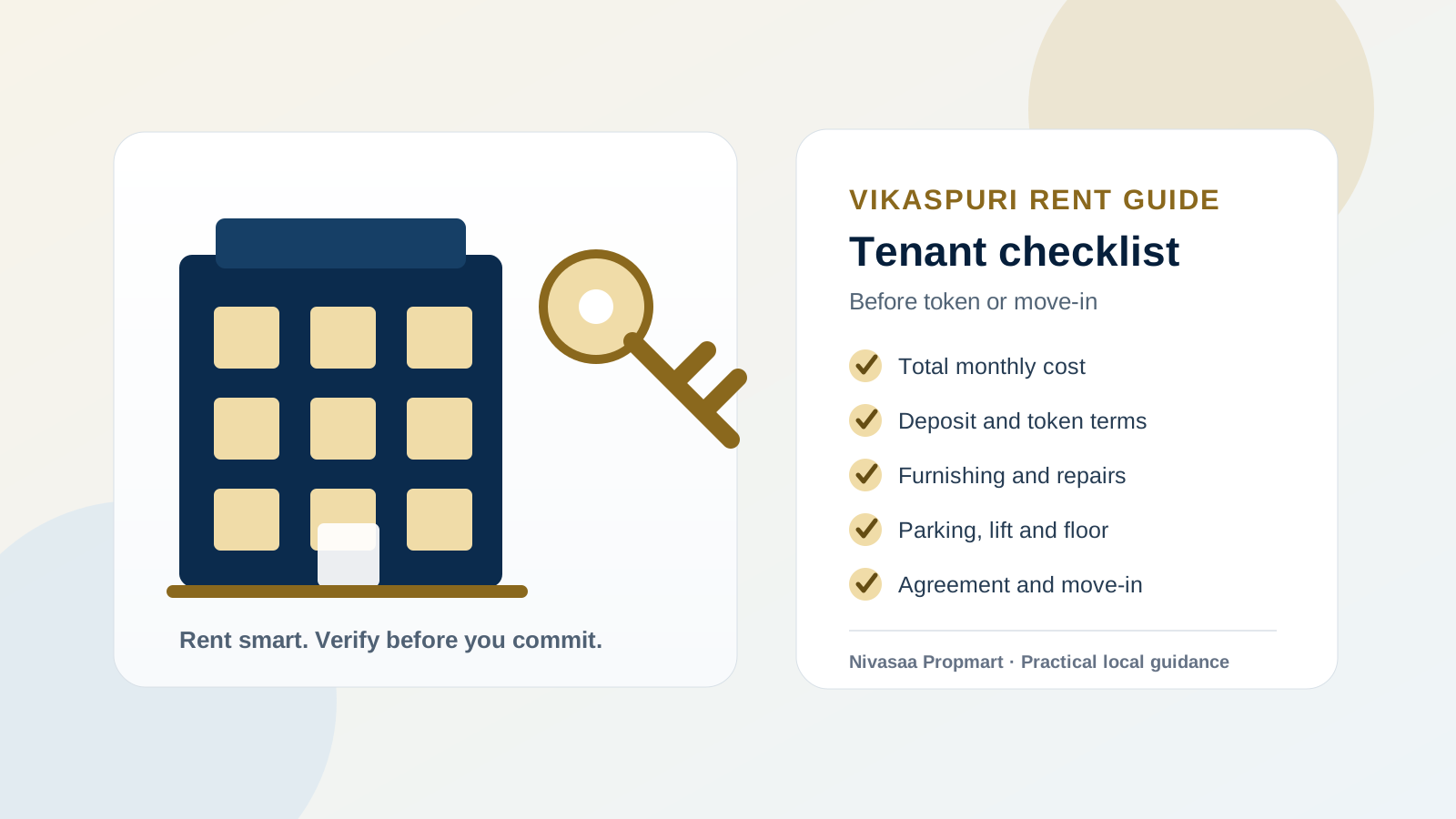
- Calculate rent + maintenance + parking + any recurring charges together.
- Write down the exact furniture and appliances that will remain.
- Check water, ventilation, lift, parking and repairs during the visit—not after moving in.
- Understand deposit, notice period, lock-in and token conditions before payment.
- Put agreed repairs, inclusions and possession timing in writing.
Most tenants do not need more listings; they need a cleaner way to compare the few homes that are genuinely possible. A good rental decision is not just about whether the living room looks spacious. It is about what the home will cost every month, whether the building works for your routine and whether the commercial terms are clear enough to avoid surprises later.
1. Start with the real monthly cost
Ask for the rent and the recurring charges separately. Maintenance, parking, electricity backup, club or common-area charges, and any other regular payment can change the actual monthly commitment. If two flats are close in rent, the cheaper-looking option may not remain cheaper after the other costs are added.
For your own comparison, keep one number in mind: “What will I realistically pay every month to live here?” That is more useful than comparing rent alone.
2. Confirm deposit, token and refund conditions before paying
A token payment should never be treated like a casual booking amount. Before transferring money, confirm who is receiving it, what it is for, whether it is adjustable against the final amount, and under what conditions it can or cannot be refunded. Keep the agreed terms in writing.
3. Treat “furnished” as a list, not a label
Furnished, semi-furnished and unfurnished can mean very different things from one home to another. During the visit, note the items that will actually remain: wardrobes, beds, air-conditioners, refrigerator, washing machine, geysers, curtains, lights, fans or any other fixture that matters to you.
If a listing photograph shows an item that will be removed before possession, that should be clear before you finalise the property. A simple inventory list can prevent a surprisingly common kind of misunderstanding.
4. Check floor, lift and staircase with your daily routine in mind
A floor that feels fine during one visit can become inconvenient if the lift is unreliable, elderly family members visit often, you have small children, or you move bulky items frequently. Walk the staircase once, check lift access, and think about what happens on a normal weekday—not only on the day of the property visit.
5. Verify parking in the situation you will actually use it
“Parking available” is too broad. Ask whether the space is fixed or shared, whether one or more vehicles can be accommodated, and whether entry becomes difficult at busy hours. If parking is important to you, physically see where the vehicle is expected to stand.
6. Look beyond paint: water, ventilation and small repairs matter
Fresh paint can make a home feel move-in ready, but it does not tell you how the property behaves day to day. Check taps, seepage signs, bathroom ventilation, kitchen plumbing, doors, locks, electrical points and the condition of fixtures you will use regularly.
If repairs are promised, write down what will be completed and by when. “Owner will get it done” is not specific enough once the moving date is close.
7. Compare the exact pocket with your commute, not the locality name
When you say you want Vikaspuri, the practical question is still: which part works for your routine? Think about the direction of work, school, regular family visits, daily shopping and the route you will use most often. Two homes in the same broad locality can feel very different once your actual daily route is considered.
If you are still building the shortlist, start with our Vikaspuri rental page and share your budget, configuration, move-in timing and one non-negotiable requirement.
8. Read agreement terms before the move-in rush
Discuss the notice period, lock-in if any, rent payment date, increase terms, maintenance responsibility, minor repair expectations and what happens at exit. The exact agreement should reflect the terms both sides have actually accepted. For legal interpretation or title-related questions, use an appropriately qualified professional rather than relying on assumptions.
9. Fix the possession date and handover condition
If you are leaving another home, booking movers or arranging school/work logistics, a vague possession date can create unnecessary cost. Confirm when the flat will be ready, which repairs or cleaning jobs are pending, and when keys can actually be handed over.
10. Take a second look at the things you almost ignored
Before finalising, revisit the two or three points you mentally marked as “probably fine”. It may be a dark bedroom, a tight parking turn, an appliance you assumed was included, or a repair that was verbally promised. A second check takes less time than living with a wrong assumption for the duration of the tenancy.
Questions worth asking during a Vikaspuri rental visit
A simple way to shortlist without wasting visits
Send one clear brief instead of asking for “all available options”. Mention your configuration, realistic upper budget, move-in date, furnishing preference, vehicle requirement and one thing you will not compromise on. It helps remove unsuitable properties before a visit is planned.
If you want help narrowing down current options, use the Vikaspuri property guide for the broader rent-and-sale context, or send the rental brief directly to Nivasaa Propmart.
Published October 9, 2026 · Content review date: October 9, 2026.